
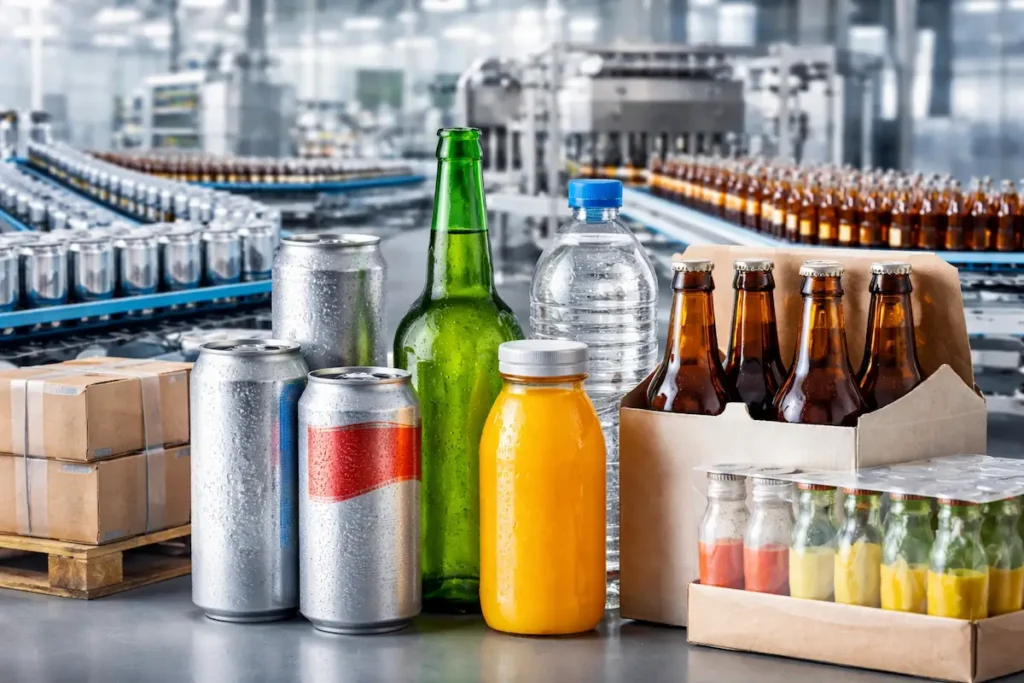
Beverage Packaging in Australia: Systems, Trends and Innovation
Beverage packaging covers far more than the bottle, can, or label. It includes the filling line, hygiene controls, gas management, quality checks, secondary packaging, and the handling steps that protect product from the filler to the customer. In Australia, those systems are changing quickly. Cost pressures, shelf-life expectations, sustainability targets, and regulatory requirements all shape how producers package beer, wine, spirits, water, juice, and ready-to-drink products.
This guide breaks down beverage packaging systems used in Australia, the trends influencing decisions, and the practical issues that affect quality. It also explains where industrial gases fit into packaging, especially for carbonation, oxygen control, and product protection.
Beverage Packaging Systems Used in Australia
Most beverage packaging systems are built around the same objective: move product into a container with repeatable quality, minimal oxygen exposure, and consistent fill and seal performance. The differences come down to format, throughput, and how sensitive the product is to oxygen and temperature.
Common systems in Australian beverage packaging include:
- Canning lines (aluminium)
Popular for beer, RTDs, flavoured beverages, and sparkling water. Cans block light and stack efficiently, but can require strong seam control and consistent cleaning practices. - Bottling lines (glass and PET)
Used across beer, wine, soft drinks, spirits, and juices. Glass is highly inert and premium-feeling. PET is lightweight and convenient, but may require careful barrier considerations depending on product and shelf-life goals. - Kegging and draught systems
Important for hospitality supply chains, especially for beer and post-mix beverages. Kegging has its own cleaning and purge requirements, and gas choice affects dispense quality. - Bag-in-box and pouch formats
Used for certain wines, syrups, concentrates, and foodservice applications. These formats often rely on oxygen control and handling discipline to maintain quality over time. - Secondary packaging and end-of-line systems
Cartoning, trays, wrap, palletising, and warehouse handling matter more than many teams expect. Damage, scuffs, heat exposure, or poor pallet stability can undermine product quality and brand perception even when the primary pack is perfect.
In practice, the best beverage packaging system is the one that matches your product sensitivity, distribution reality, and quality control capability.
Food and Beverage Packaging: What Changes When the Product Is a Beverage?
Beverage production sits within the broader food and beverage packaging world, but beverages bring specific constraints. Small process changes can show up quickly in carbonation, flavour, clarity, or stability.
Key differences include:
- Hygiene and contamination control
Liquids move through shared lines, valves, and fillers. Cleaning and sanitation performance directly affects risk. Even minor biofilm issues can lead to off-notes, over-foaming, or spoilage. - Shelf-life drivers: oxygen, light, and temperature
Oxygen pickup can dull flavour and aroma, change colour, and shorten shelf life. Light exposure matters for some beverages (especially beer), and heat exposure during storage and transport can accelerate quality loss. - Carbonation retention and consistency
For carbonated beverages, packaging decisions affect dissolved CO₂ levels and headspace conditions. Container choice, fill temperature, and closing performance all matter. - Scalability: co-pack vs in-house
Many Australian producers use co-packers or mobile canning services at different stages of growth. That can improve capital efficiency, but it increases the need for clear specifications, repeatable QA, and well-defined responsibilities.
Because the food & beverage packaging environment is tightly regulated and highly competitive, beverage packaging is often a balance between process control and brand execution—quality is part engineering, part discipline.
Australia Beverage Packaging Market: What’s Driving Change?
The Australia beverage packaging market has a few clear pressures that continue to influence format decisions and investment priorities. Even when the product is strong, packaging decisions are shaped by operational realities.
Key drivers include:
- Input costs and supply reliability
Producers weigh not only the unit cost of cans or bottles, but also lead times, changeover time, downtime risk, and consistency of consumables (closures, labels, seals, cleaning chemicals, and gas supply). - Consumer preference and convenience
Cans remain popular for portability and recyclability messaging. Glass continues to signal quality in many categories. Producers also follow venue needs, including stackability, storage footprint, and handling ease. - Sustainability and material pressure
Lightweighting, recycled content targets, and packaging reduction are common themes. For some beverages, barrier performance and shelf-life considerations limit how far lightweighting can go without other changes. - Regulatory and compliance environment (high-level)
Food contact requirements, labelling rules, and container deposit schemes affect packaging choices and distribution logistics. Most producers build compliance into supplier selection rather than retrofitting later.
This is why beverage packaging decisions rarely sit with one team. Operations, QA, marketing, procurement, and finance all have a stake, and trade-offs are unavoidable.
Beverage Packaging Innovation: Practical Trends to Watch
In the food and beverage packaging industry, “innovation” often sounds like new materials and new formats. Some of that is real. But in many facilities, the biggest improvements come from better control, which means measuring the right things and reducing variation.
Practical beverage packaging innovation trends include:
- Lightweighting and improved barrier performance
Producers want lower material use without compromising product stability. That pushes attention toward barrier layers, liner performance, closure integrity, and oxygen control practices. - Digital printing and short-run label flexibility
This supports faster product iteration and seasonal releases. It also increases the need for consistent packaging line settings, because more SKUs can mean more changeovers and more chances for error. - Better oxygen management across the process
Oxygen isn’t only a packaging issue. It enters through transfers, tanks, hoses, and poor purge steps. Many producers are tightening SOPs around purging, sealing, and monitoring, especially when shelf life matters. - Line monitoring and QA automation
Dissolved oxygen checks, carbonation verification, seam inspection, leak detection, and data logging are increasingly common. These systems reduce rework and protect brand reputation when production scales. - Growth of co-packing and mobile canning
Many businesses use co-packers to scale without major capex. The best outcomes come when specifications are clear (including carbonation, oxygen targets, and packaging tolerances) and quality checks are agreed upfront.
These food and beverage packaging innovations are less about chasing novelty and more about building repeatability. Over time, repeatability is what protects product quality and customer trust.
The Role of Gases in Beverage Packaging Quality
Industrial gases sit in the background of many packaging processes, but they have a direct impact on carbonation, oxygen exposure, and product stability. For beverage producers, gas choices and gas handling practices often show up as consistent quality or recurring issues.
Key roles include:
- Carbon dioxide (CO₂) for carbonation and dispense
CO₂ drives carbonation in beer, sparkling water, soft drinks, and many RTDs. Consistency depends on temperature, contact time, pressure control, and stable supply. CO₂ is also used in hospitality dispense systems. Pacific Gas supplies Carbon Dioxide for relevant applications. - Nitrogen for blanketing and purging
Nitrogen helps reduce oxygen exposure during transfers, tank headspace management, and certain packaging steps. It can also support pressure transfer and product protection where oxygen pickup is a concern. Pacific Gas supplies Nitrogen. - Mixed gas in certain dispense contexts
Some hospitality systems use mixed gas for specific pour characteristics and stability. When used, the objective is consistent dispense performance with controlled carbonation and minimal quality drift. - Argon for niche inerting use cases
Argon is inert and can be used in specific applications where an inert blanket is required. Many beverage operations rely primarily on nitrogen and CO₂, but argon may be used depending on process and product requirements. Pacific Gas supplies Argon.
A practical checklist for operators:
- Where oxygen enters: transfers, pump seals, hoses, tank headspace, filler bowls, poor purge steps, warm filling conditions
- Where inerting helps: tank headspace management, certain transfers, packaging preparation steps, keg purging practices where applicable
- What to monitor: dissolved oxygen (where relevant), carbonation consistency, temperature at fill, seam/leak performance, and repeatable purge procedures
In short, gases are part of beverage packaging quality control. They don’t replace good process discipline, but they support it when the basics are in place.
Choosing Beverage Packaging Solutions: Key Questions to Ask
When evaluating beverage packaging solutions, the most useful questions are often the simplest. They keep decisions grounded in product requirements rather than assumptions.
Consider:
- What’s the product type? Still vs carbonated. Oxygen-sensitive vs more forgiving. High-value vs high-volume.
- What shelf life do you need in real distribution conditions? Cold chain and ambient distribution behave very differently.
- Which format fits your brand and operations? Cans, glass, PET, kegs, or alternative formats each have trade-offs.
- What throughput and labour model are realistic? Changeovers and downtime can quietly drive cost.
- What QA checks can you do consistently? If you can’t measure it, it’s hard to manage it.
- How dependable are consumables and service support? Suppliers and maintenance response matter as much as equipment features.
These questions also help when reviewing beverage packaging companies. The goal is not only to buy a system, but to keep it performing reliably as the product range grows.
Common Packaging Problems and How to Reduce Them
Most packaging problems show up as waste, returns, or brand damage. They also tend to repeat until the root cause is identified.
Common issues include:
- Inconsistent carbonation
Often linked to temperature variation, unstable pressure control, or inconsistent CO₂ contact. Tighten temperature control and verify carbonation at defined checkpoints. - Foaming at fill
Can be caused by warm product, poor line balance, contamination, or incorrect gas management. Stable process settings and hygiene discipline help. - Oxygen pickup and flavour drift
Often comes from transfers, poor purge steps, or unmanaged headspace. Map oxygen entry points and standardise inerting where it’s genuinely required. - Leakers and seam issues (cans)
Seam checks and operator training matter. Small drift in settings can create large downstream problems. - Micro contamination risks
Packaging lines are vulnerable points. Cleaning verification and preventive maintenance reduce risk. - Label scuffing and secondary packaging failures
These issues aren’t “cosmetic” if they affect shelf presence or barcode readability. Review handling, wrap tension, and pallet patterns.
Strong beverage packaging outcomes usually come from fewer surprises: consistent inputs, clear SOPs, and reliable checks.
What to Prioritise in 2026
If you’re making packaging decisions this year, focus on the fundamentals:
- Choose format based on shelf-life and distribution reality
- Build simple QC habits (carbonation checks, seam checks, consistent temperatures)
- Reduce oxygen pickup points across the process, not only at the filler
- Keep consumables and gases consistent to reduce variation
- Make sure supplier support and training match your operational needs
These priorities suit both established producers and growing brands moving from small batches to consistent volume.
Find Gas Support Locally with Pacific Gas
Pacific Gas supplies industrial gases for beverage operations through local distributors via an exchange model. You bring an empty cylinder to your nearest distributor and swap it for a full one. There is no in-store waiting for refills.
To discuss gas requirements for food and hospitality, visit our Food & Hospitality page or contact the team via our contact page.


