

Gases for Wine Preservation and Winemaking
Once fermentation ends, oxygen becomes the winemaker’s main enemy. Uncontrolled oxygen exposure flattens aroma, browns colour and, given enough time, turns wine to vinegar. That is why wineries, bottling lines and hospitality venues all rely on inert gas: a blanket of gas that keeps air away from the wine at every stage where it would otherwise be exposed. Four gases do this work in Australia: carbon dioxide, nitrogen, a pre-blended nitrogen/CO2 mix and argon. Each behaves differently, and each has jobs it suits best. This guide explains where each gas fits, from tank to pour.
Why Oxygen Management Matters in Wine
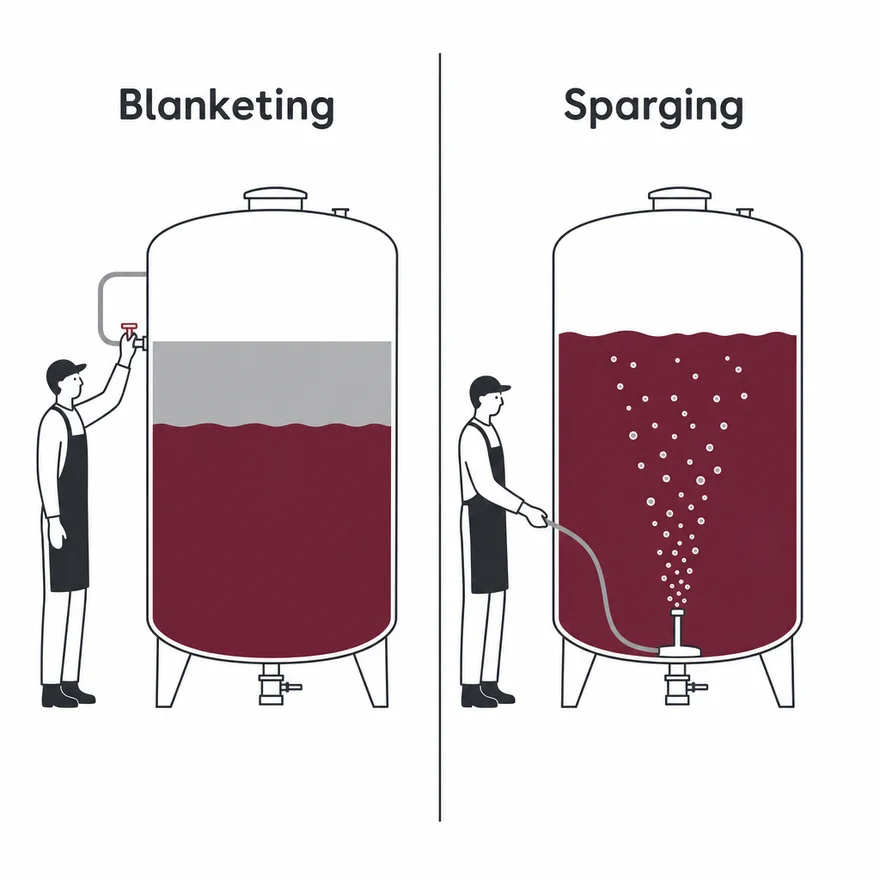
Small, controlled amounts of oxygen have a place in winemaking; barrel ageing depends on slow oxygen exchange through the timber. The problem is uncontrolled exposure. Every time a tank is left part-full, wine is racked or pumped, a bottle line runs, or an open bottle sits behind a bar, wine meets air.
The damage happens in two ways. Oxygen reacts directly with the wine, oxidising aromatic compounds and dulling fresh fruit character. It also feeds spoilage organisms such as acetic acid bacteria, which convert alcohol to vinegar in the presence of air.
Inert gas solves both problems the same way: it physically displaces air from the space above or around the wine, so there is little or no oxygen left to react. The technique is often called blanketing when it protects a surface, and sparging when gas is bubbled through wine to strip dissolved oxygen out of it.
The Four Gases Used in Winemaking
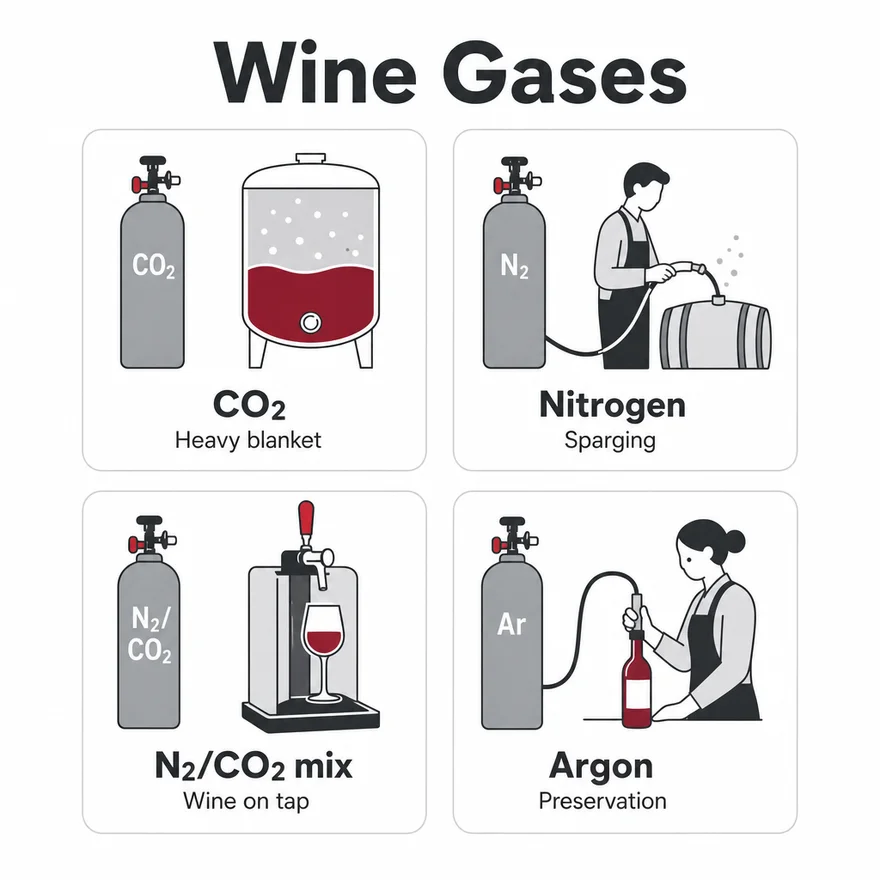
Carbon Dioxide
CO2 is the workhorse of the cellar. It is heavier than air, so it settles over the wine surface and holds a stable blanket in tanks and open vessels. It is also a natural product of fermentation, which makes it a familiar presence in any winery.
Its one complication is solubility. CO2 dissolves readily into wine, and prolonged contact can leave a still wine with a detectable spritz and a sharper acid impression. That makes straight CO2 best for shorter-term protection, purging empty vessels and any application where a little dissolved CO2 is acceptable or even desirable.
Nitrogen
Nitrogen is the opposite character: very low solubility, so it can sit in contact with wine for long periods without changing it. That makes it the standard choice for sparging out dissolved oxygen before bottling, pressurising transfer lines and flushing bottles and hoses.
Its limitation is weight. Nitrogen is slightly lighter than air, so it does not settle into a lasting blanket over a wine surface; it mixes and drifts out of an open headspace relatively quickly. Used as a continuous purge, or in closed vessels, it is highly effective.
Nitrogen/CO2 Mix
A pre-blended nitrogen/CO2 mix combines the two behaviours: enough CO2 to give the blanket body and hold position over the wine, with nitrogen keeping total CO2 pickup low so still wines stay still. Wineries use the mix for headspace protection in part-full tanks, and venues use the same blend to pour wine and other beverages on tap without over-carbonating or flattening them.
Argon
Argon is the premium preservation gas. It is completely inert, noticeably heavier than air (heavier than CO2’s blanket in practice, as it does not dissolve into the wine), and it will not alter flavour, aroma or mouthfeel at all. It forms a dense, stable layer over the wine surface that lasts.
The cost per cylinder is higher than nitrogen or CO2, which is why argon is used where its properties earn their keep: topping barrels and part-full tanks holding premium wine, and by-the-glass preservation systems in restaurants and cellar doors, where an opened bottle needs to pour the same on day five as it did on day one.
Where Gas Is Used, from Tank to Pour
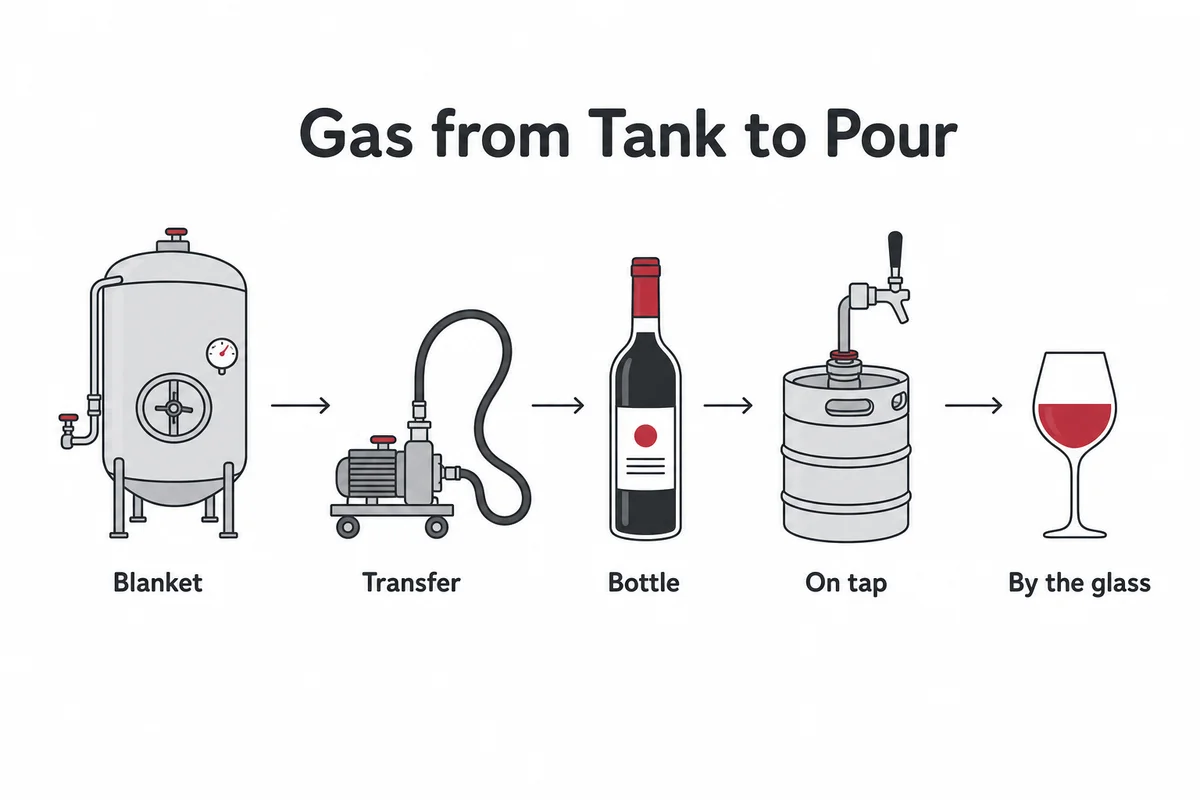
In the winery, the common applications are purging tanks and lines before filling, blanketing the headspace of part-full tanks, protecting wine during racking and transfers, and sparging to pull dissolved oxygen out of wine before it goes to bottle. On the bottling line, gas flushes empty bottles and fills the headspace under the closure, so the wine meets as little air as possible on its way in.
In hospitality, the same logic continues after the wine leaves the winery. Wine on tap runs on gas pressure, usually the nitrogen/CO2 mix, which dispenses the wine without changing its style. Behind the bar, by-the-glass systems inject argon into opened bottles so premium wines can be sold a glass at a time across several days without oxidising. There is more on how gas serves the broader beverage sector in the guide to nitrogen in food and beverage.
Food-Grade Gas and Safe Handling
Any gas that contacts wine or beverage lines should be food-grade, supplied and handled to food-safety standards, rather than industrial gas drawn from a workshop bottle.
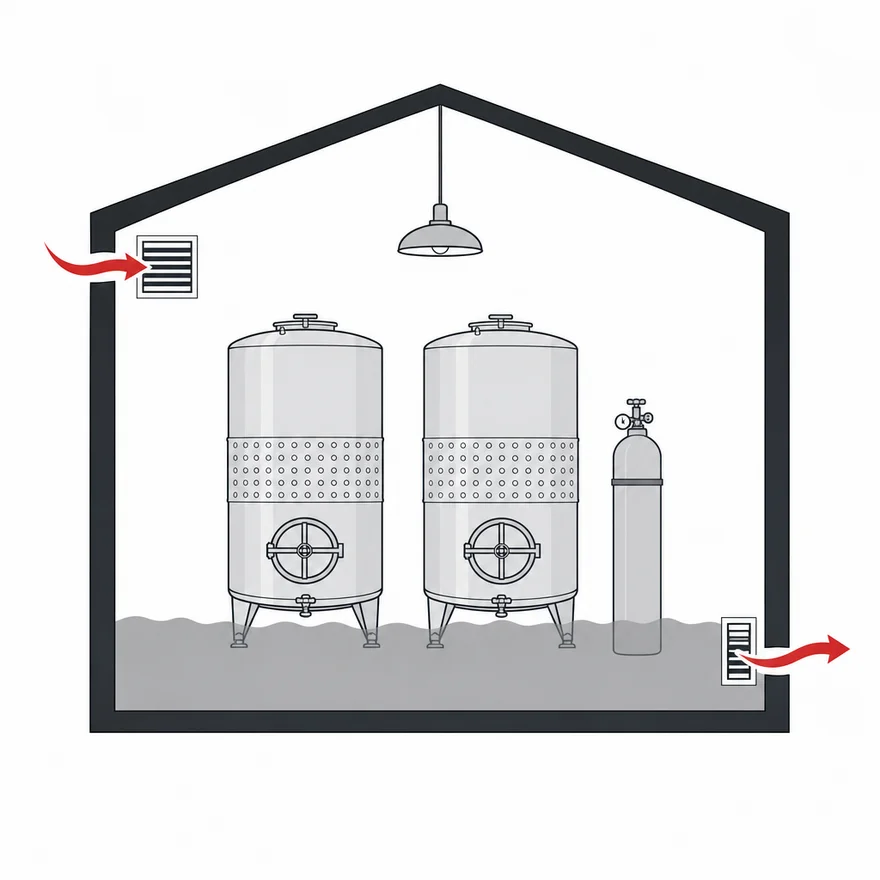
Handling also needs care. CO2 and nitrogen both displace breathable air, and cellars, tank tops and confined spaces are exactly where they accumulate. Ventilate work areas, never enter a recently purged tank without clearing and testing it, and store cylinders upright, restrained and away from heat.
Wine Gas FAQ
Which gas is best for preserving an open bottle of wine?
Argon. It is heavier than air, completely insoluble and flavour-neutral, so it settles over the wine and protects it without changing it. Most commercial by-the-glass preservation systems run on argon for exactly this reason.
Does nitrogen change the taste of wine?
No. Nitrogen is almost insoluble in wine and chemically inert, so it does not carbonate, flavour or otherwise alter it. That neutrality is why it is used for sparging and line pressurisation.
Can straight CO2 be used to preserve still wine?
For short periods, yes. Over longer contact, CO2 dissolves into the wine and can leave a slight spritz and sharper acidity. For extended headspace protection of still wine, a nitrogen/CO2 mix or argon is the safer choice.
What gas is used for wine on tap?
Usually a nitrogen/CO2 blend. The mix pushes the wine through the line and protects it in the keg while keeping CO2 pickup low, so still wines pour still and lightly sparkling styles keep their intended level of fizz.
Winemaking and Preservation Gas from Pacific Gas
Pacific Gas supplies carbon dioxide, nitrogen, a pre-blended nitrogen/CO2 mix and argon in cylinders through local distributors across Australia, serving wineries, bottling operations and hospitality venues. Supply runs on simple customer-owned cylinder exchange, with no rental contract, to suit anything from a cellar door pouring by the glass to a winery running a bottling line. To set up gas supply for winemaking or wine service, find a distributor nearby or contact Pacific Gas to talk through which gas fits the job.


