
Beer Gas and Cellar Gas for Venues
Every keg system in a pub, club or bar runs on gas, and the gas does two jobs at once: it pushes beer from the keg to the tap, and it keeps the right level of fizz in the beer while it does so. Get the gas wrong and the symptoms show up in the glass, flat beer, a glass of foam, or a stout with no head worth the name. This guide covers the two gases cellars run on, CO2 and nitrogen/CO2 mix, when each is the right choice, how to size cylinders for a venue, and the safety rules that matter in a closed cellar.
The Two Gases Behind the Taps
CO2: the Standard Dispense Gas
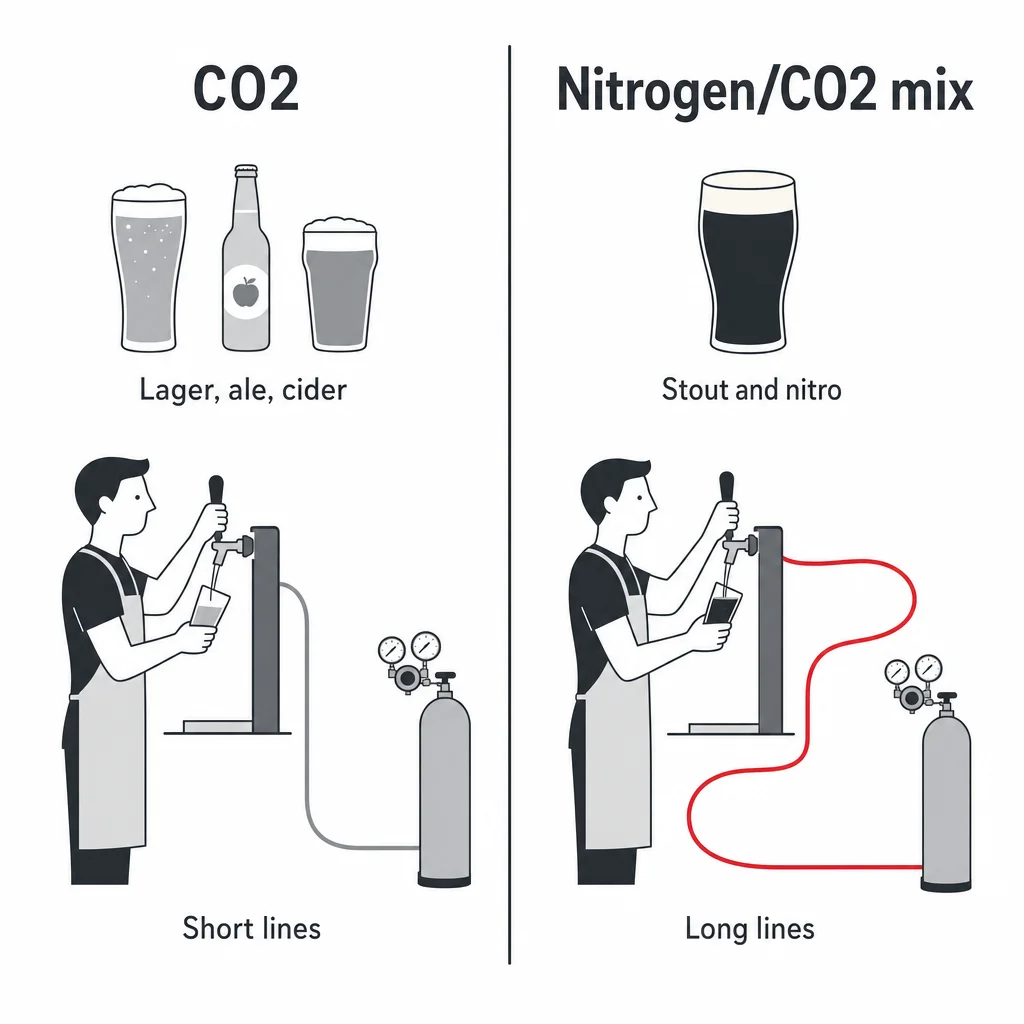
Carbon dioxide is the default beer gas because it is the same gas already dissolved in the beer. Pushing a keg with CO2 at the right pressure keeps the carbonation level exactly where the brewer set it: the gas in the headspace and the gas in the beer stay in balance. CO2 suits standard draught beer, cider and pre-mixed soft drink systems, and it doubles as the carbonation source for post-mix and sparkling water setups.
Nitrogen/CO2 Mix: for Nitro Pours and Long Lines
Some pours need more push than straight CO2 can give without over-carbonating the beer. Stouts and nitro beers are the classic case: the tight, creamy head comes from nitrogen, which barely dissolves in beer, delivered through a restrictor plate on the tap. Mixed gas also solves long-draw systems, where beer travels a long line from a remote cellar and needs high driving pressure; because the nitrogen share of the mix does not dissolve, the beer arrives at the tap without picking up extra fizz on the way. Pacific Gas supplies a nitrogen/CO2 blend used for exactly this dispense and carbonation duty across hospitality. Nitrogen on its own also has a growing role in venues pouring nitro cold brew coffee.
The practical rule: standard lagers, ales and ciders on short lines run on CO2; stouts, nitro serves and long line runs move to the mix. Many venues run both, CO2 on most taps, mixed gas on the stout font.
Pressure, Temperature and Why Beer Pours Badly
Most dispense faults blamed on the keg or the beer are gas and temperature faults. Three settings decide how a beer pours.
Pressure must match the beer’s carbonation and the system’s design. Too low and the beer pours flat and slow, and CO2 comes out of solution in the line, causing surging foam. Too high and the beer over-carbonates over days, then fobs at the tap.
Temperature is the quiet culprit. Warm beer holds less CO2, so a keg that has crept above cellar temperature will foam at any pressure. A consistent cellar temperature matters as much as the regulator setting.
Balance means the line resistance, keg pressure and tap all working together. When a system is rebalanced, taps added or lines lengthened, the gas settings need to move with it; a venue that has changed its setup without revisiting pressure is usually the venue with the foam problem.
Sizing Gas for a Venue
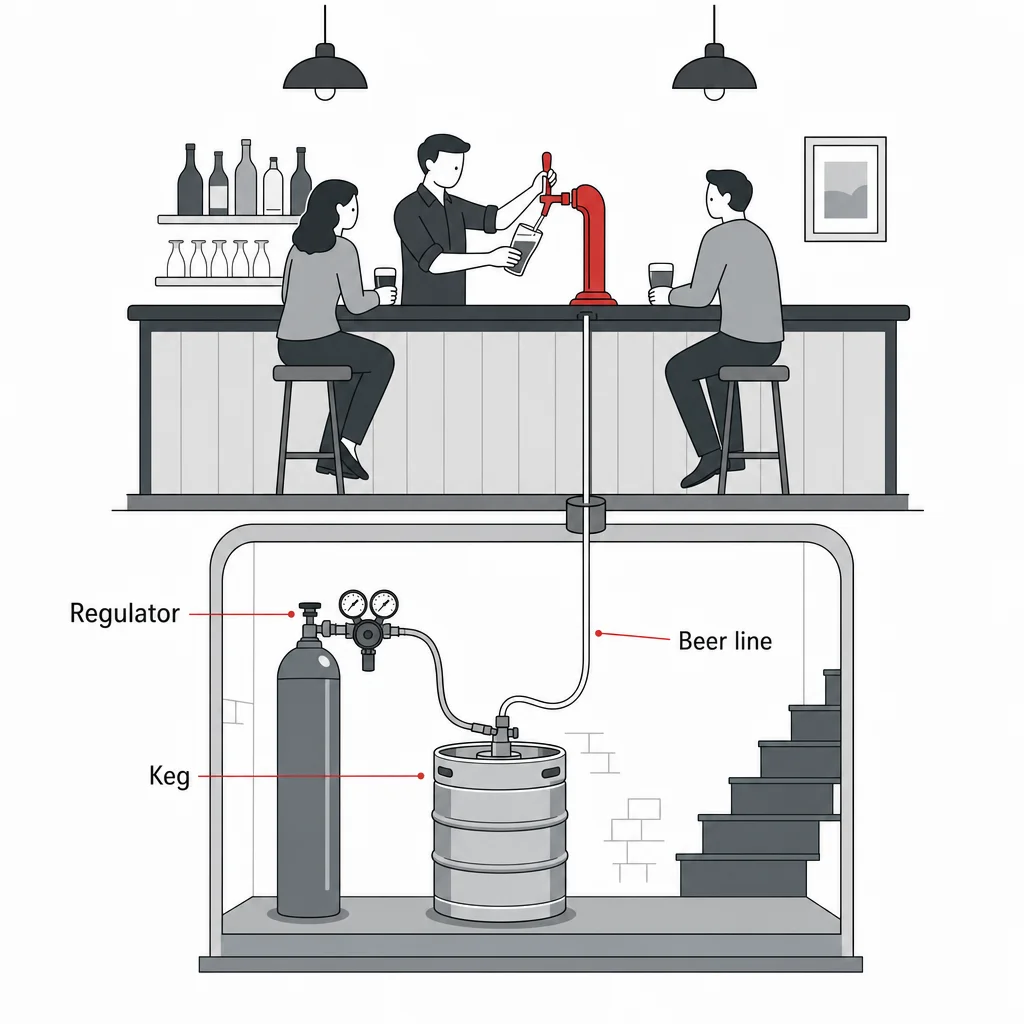
CO2 for dispense is measured by weight. Pacific Gas supplies CO2 in D cylinders holding 6 kg, F cylinders holding 22 kg and G cylinders holding 31 kg, and the nitrogen/CO2 mix in F-size cylinders. As a working rule, a kilogram of CO2 pours in the order of six to eight 50-litre kegs on a well-balanced system, so an F-size bottle covers roughly 130 to 175 kegs, months of trade for a small venue, a busy period for a large one.
The sizing questions for a cellar are practical. How many taps, and how far do the lines run? Is there a stout font that needs mixed gas alongside the CO2? Where does the bottle stand, and is there room to restrain a spare upright? Most venues land on an F or G as the working bottle with a D as the emergency spare, and swap on a schedule rather than waiting for a Friday night failure.
Cellar Gas Safety
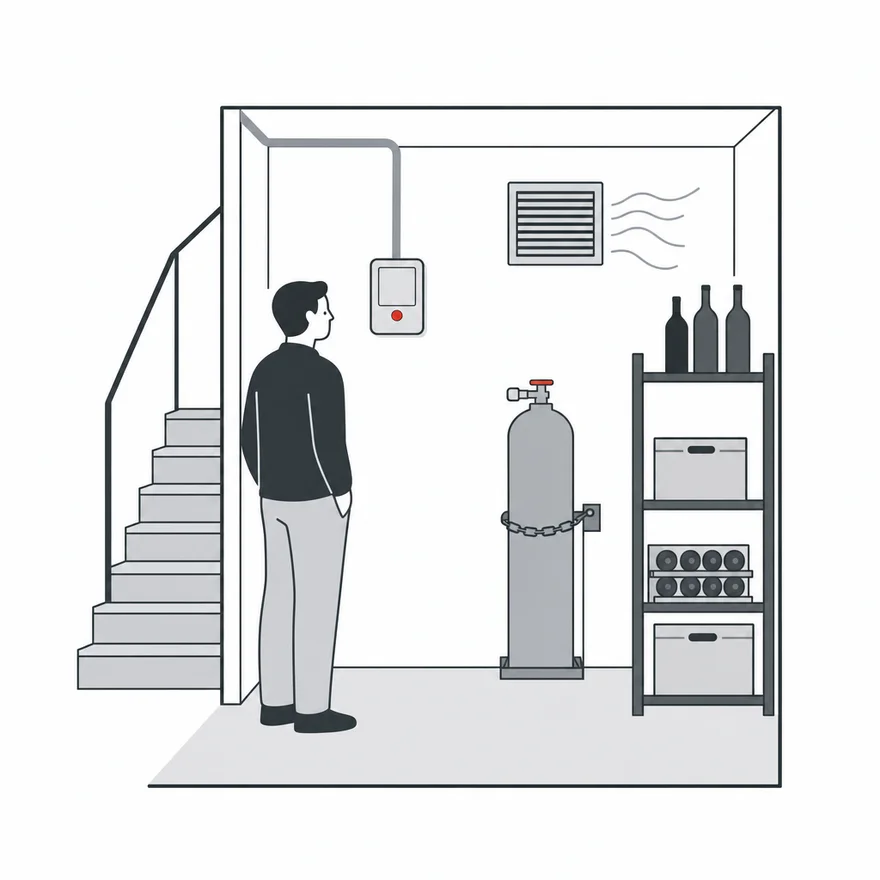
CO2 is heavier than air, and a leak in a closed cellar fills the space from the floor up, displacing the air a person breathes. That makes gas safety in cellars a matter of procedure, not just equipment.
The rules a venue should hold to: keep the cellar ventilated, and never treat a cellar door as optional airflow. Fit a CO2 monitor where gas is stored or used below ground, and treat its alarm as an evacuation, not a curiosity. Keep cylinders restrained upright, connected through a regulator in good condition, and check lines and couplers for leaks when bottles are changed, a persistent hiss or a bottle that empties faster than trade explains is a warning, not a nuisance. Staff who change kegs and bottles should know the symptoms of CO2 exposure: breathlessness and dizziness in a cellar mean leave first and investigate second.
Beer Gas FAQ
What gas is used for beer taps?
CO2 for most draught beer, cider and post-mix. Stouts, nitro beers and long-draw systems use a nitrogen/CO2 mix, which delivers higher dispense pressure without over-carbonating the beer.
What is the difference between CO2 and beer gas mix?
CO2 maintains the beer’s carbonation and suits standard systems. Mixed gas adds nitrogen, which does not dissolve in beer, so systems can run higher pressure for creamy heads or long lines while the fizz stays constant.
How many kegs does a CO2 bottle pour?
On a balanced system, roughly six to eight 50-litre kegs per kilogram of gas. A 22 kg F-size cylinder covers around 130 to 175 kegs; a 6 kg D-size around 35 to 50.
Why is my beer pouring all foam?
Usually temperature or pressure, not the keg: beer too warm, gas set too high or too low, or a system knocked out of balance. Check cellar temperature and the regulator before blaming the beer.
Is CO2 in a cellar dangerous?
It can be. CO2 displaces air from the floor up in enclosed spaces. Ventilate the cellar, fit a CO2 monitor, keep cylinders and lines leak-checked, and train staff to leave immediately if they feel breathless or dizzy below ground.
Cellar Gas from Pacific Gas
Pacific Gas supplies CO2 in D, F and G cylinders and a nitrogen/CO2 dispense mix through local distributors across Australia, on swap-and-go exchange, the empty bottle exchanges for a full one, on customer-owned terms with no rental contract. Distributors supply pubs, clubs, cafes and restaurants alongside the industrial trade, so a venue’s beer gas comes from the same counter as its kitchen and workshop gases. To line up supply for a venue or size a system, contact Pacific Gas.


