
Choosing the Right Gas Cylinder Size
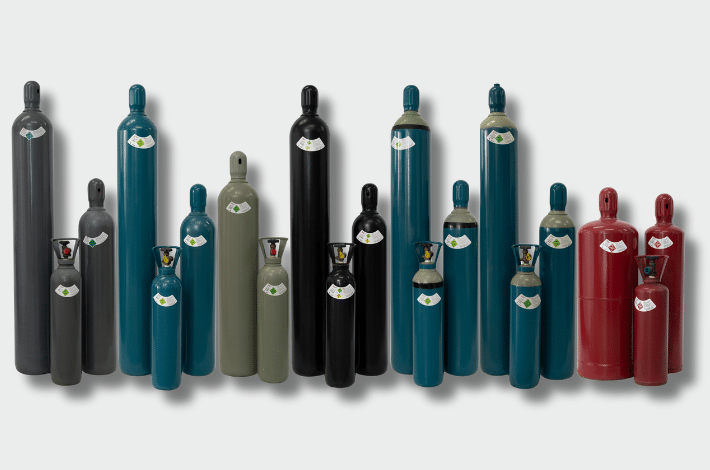
Gas cylinder sizes are one of the most common questions at the trade counter, and the answer decides how often a business swaps bottles, how much storage it needs and what each cubic metre of gas ends up costing. Pacific Gas supplies its industrial gases in three standard cylinder sizes, D, E and G, with contents that vary by gas. This guide sets out the actual contents of each size for argon, oxygen, nitrogen, acetylene and carbon dioxide, the maths for working out how long a cylinder lasts, and the practical factors, usage, storage, handling and compliance, that point to the right size for the job.
Australian Gas Cylinder Sizes at a Glance
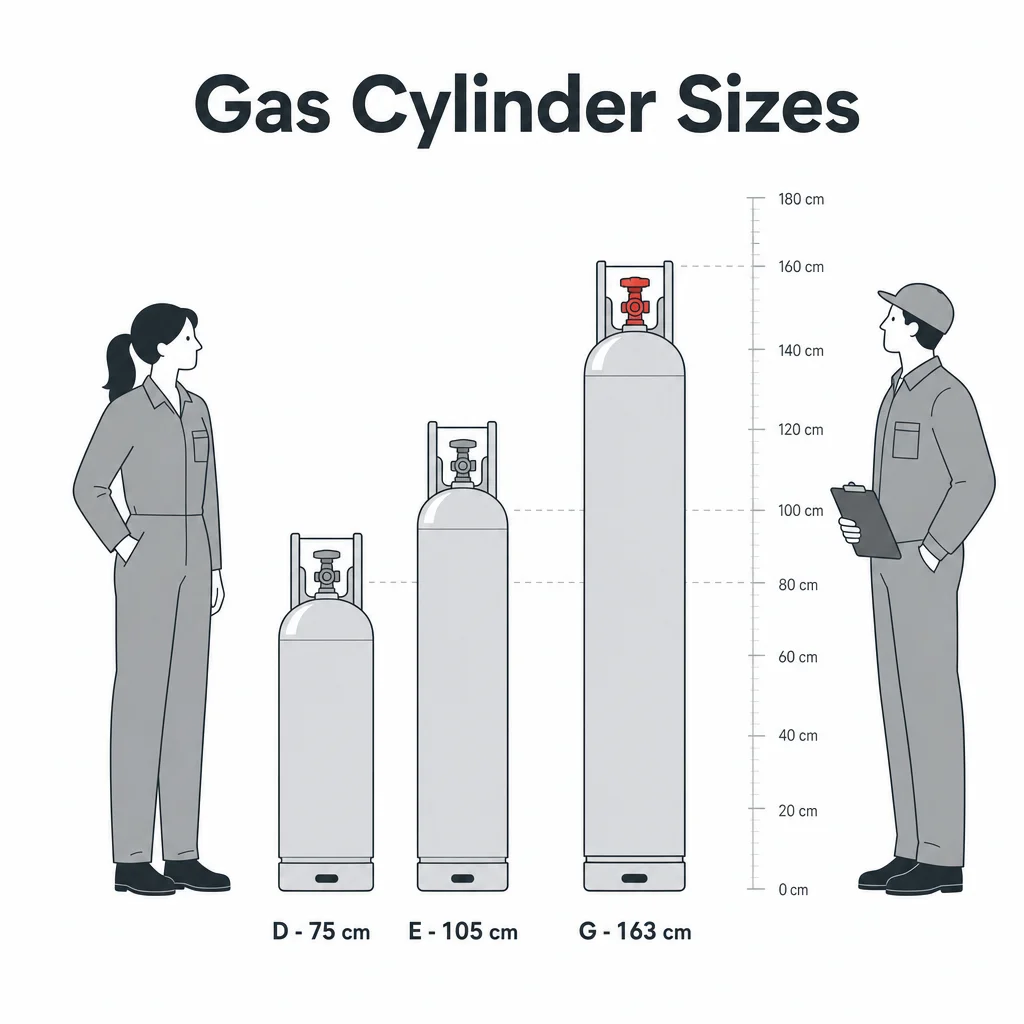
Australian industrial gas suppliers size cylinders by letter, and the letters refer to the physical bottle, not the amount of gas inside. For the compressed gases, a D-size cylinder stands about 75 cm tall, an E-size about 105 cm, and a G-size about 163 cm, roughly chest height, waist-to-shoulder height and full height against a wall.
The gas contents of the same letter size change with the gas. Compressed gases such as argon, oxygen and nitrogen are measured in cubic metres of gas. Carbon dioxide is stored as a liquid under pressure, so its contents are quoted in kilograms. Acetylene is dissolved in a solvent inside the cylinder and holds less free gas for the same bottle. That is why an E-size argon and an E-size acetylene are both “E” but carry very different volumes, and why the tables below matter more than the letter on the bottle.
Cylinder Contents by Gas: D, E and G
The figures below are the actual contents of Pacific Gas cylinders as supplied, measured at standard conditions.
Argon and Argon Mixes
Argon for TIG welding and the Pacshield MIG blends comes in three sizes: D holds 1.7 cubic metres, E holds 4.8 cubic metres and G holds 10.5 cubic metres, filled to 200 bar working pressure. Argon cylinders are peacock blue. A workshop welding daily is usually on a G; a farm shed doing occasional repairs is well served by a D or E.
Oxygen
Oxygen runs D at 1.7 cubic metres, E at 4.0 cubic metres and G at 10.3 cubic metres. Cylinders are black. Oxygen is almost always paired with a fuel gas for cutting or brazing, so most operators size their oxygen one step larger than the acetylene beside it, oxy-fuel cutting draws oxygen faster than fuel gas.
Nitrogen
Nitrogen is supplied in D at 1.7 cubic metres, E at 4.0 cubic metres and G at 9.1 cubic metres, in pewter-coloured cylinders. Typical users include workshops pressure-testing lines, food and beverage operations and sites running purging or blanketing duties.
Acetylene
Acetylene is dissolved in solvent rather than simply compressed, so contents per size are lower: D holds 1.0 cubic metre, E holds 3.2 cubic metres and G holds 7.0 cubic metres. Cylinders are claret-coloured, and run shorter and squatter than the compressed-gas bottles of the same letter. Acetylene bottles must always be stored and used upright, which is worth remembering when planning van racking or a small store.
Carbon Dioxide
CO2 is measured by weight: a D cylinder holds 6 kg, an F holds 22 kg and a G holds 31 kg, in green-grey cylinders. CO2 covers MIG welding on steel, carbonation and beverage dispense, and modified atmosphere packaging. Hospitality venues typically run F or G bottles in the cellar and a D as the portable spare.
How Long Will a Cylinder Last?
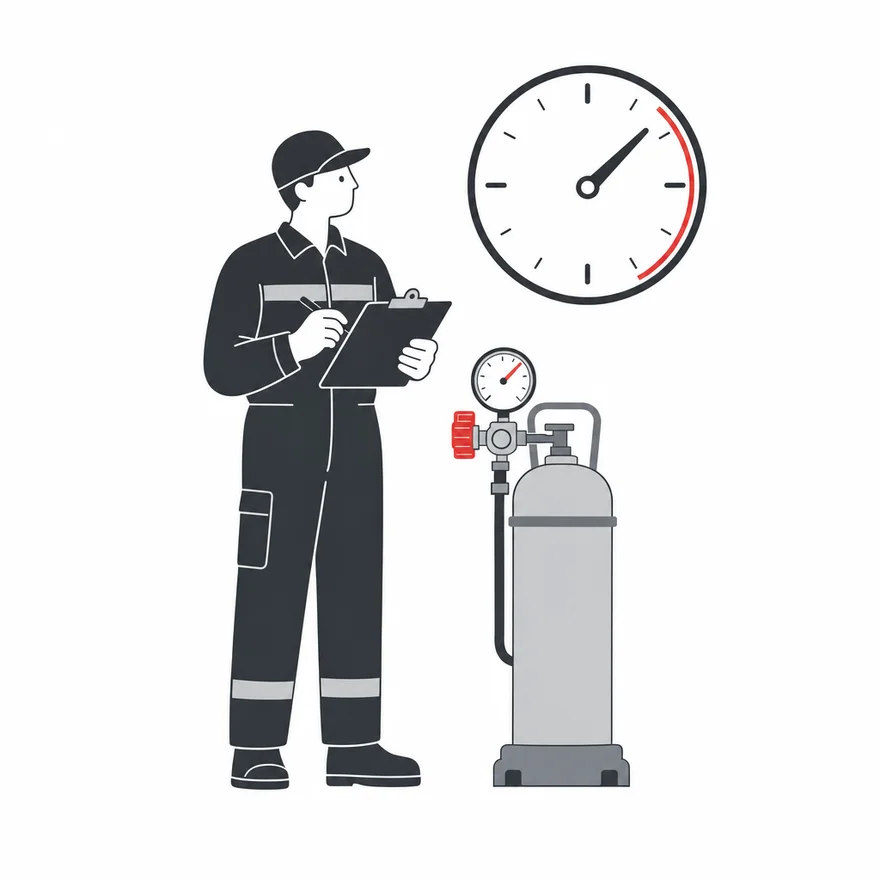
Run time is contents divided by flow rate. A welding job running 15 litres per minute of shielding gas uses 0.9 cubic metres per hour of arc time, so an E-size argon at 4.8 cubic metres gives around five hours of continuous arc time, and a G around eleven and a half. Real-world numbers land higher than that suggests because nobody holds an arc for hours straight; a fabricator on a G-size bottle typically swaps monthly rather than weekly.
For CO2 dispense, a rule of thumb many venues use is that a kilogram of CO2 pours roughly six to eight kegs depending on system pressure and waste, so a 22 kg F-size covers a busy weekend with a wide margin.
Two practical rules follow from the maths. If a cylinder is being swapped more than about once a month, moving up a size cuts cost per cubic metre and swap-run downtime. If a bottle sits for many months between uses, a smaller size is easier to handle and store, and ties up less capital.
Storage, Handling and Compliance
Size choice is also a safety and storage question. AS 4332, the Australian standard for the storage and handling of gases in cylinders, applies to businesses holding gas on site, and Safe Work Australia guidance covers cylinders as hazardous chemicals in the workplace.
The practical points scale with cylinder size. All cylinders should be restrained upright, stored in ventilated areas away from heat and ignition sources, and moved with a cylinder trolley rather than rolled or dragged. A G-size bottle weighs enough that manual handling becomes a genuine risk factor: if a site has no trolley, ramp or fixed manifold, an E-size may be the safer working choice even where a G is cheaper per cubic metre. Vehicle transport of D and E sizes is routine for mobile welders and service techs; carrying larger cylinders regularly is a sign the site should hold stock instead.
Customer-Owned Cylinders
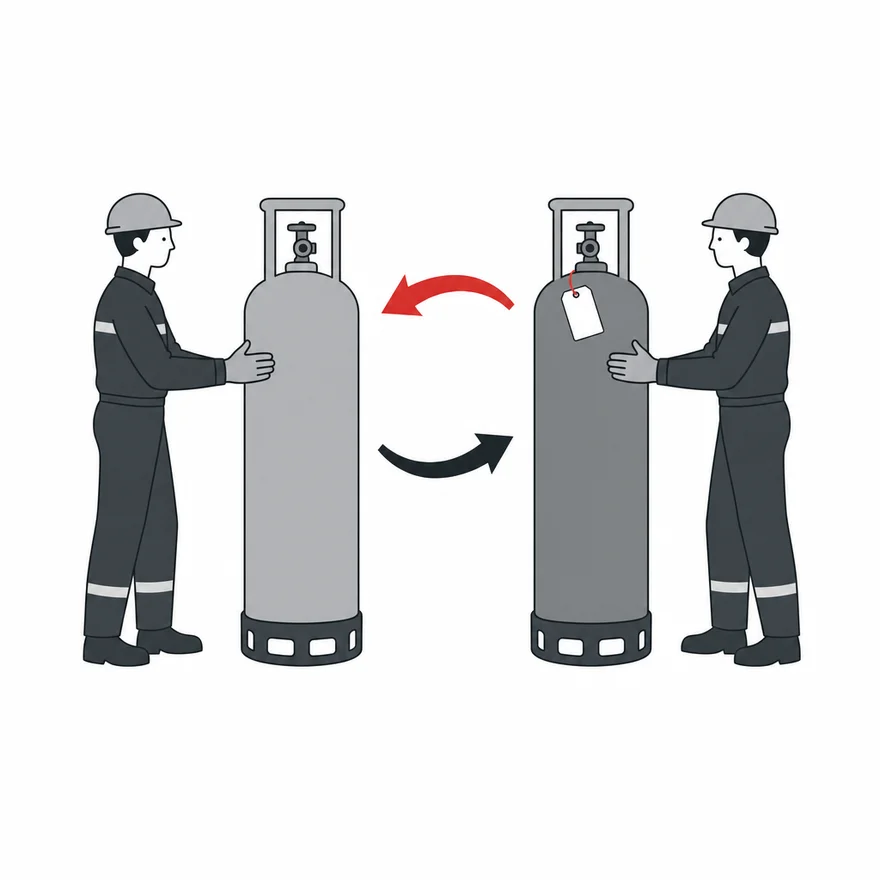
Pacific Gas cylinders run on a swap-and-go exchange, the same idea as a BBQ gas bottle: the empty cylinder is exchanged for a full one at the local distributor. Pacific Gas cylinders are customer-owned: the business buys the cylinder outright, then exchanges it at any distributor location that sells customer-owned cylinders, with no rental contract and no ongoing rental charge. That keeps the size decision simple: it comes down to how much gas is used between swaps, not a rental rate.
Gas Cylinder Size FAQ
What gas cylinder sizes are available in Australia?
Pacific Gas supplies D, E and G sizes across its core gases, plus an F size for CO2 and the N2/CO2 beverage mix. D stands about 75 cm tall, E about 105 cm and G about 163 cm. Contents vary by gas, so check the figures for the specific gas rather than the letter alone.
How long does an E-size argon bottle last?
An E-size argon cylinder holds 4.8 cubic metres. At a typical MIG or TIG flow of 15 litres per minute, that is roughly five hours of continuous arc time, which in practice covers weeks of intermittent workshop welding.
What size welding gas bottle should I buy?
Match the bottle to arc time. Occasional repairs suit a D; a home workshop or farm shed usually runs an E; daily fabrication belongs on a G, where the cost per cubic metre is lowest and swaps are least frequent.
Are bottle sizes the same for every gas?
The physical sizes are, the contents are not. An E cylinder holds 4.8 cubic metres of argon but only 3.2 cubic metres of acetylene, because acetylene is dissolved in solvent rather than compressed. CO2 is measured in kilograms, not cubic metres.
Can I exchange a cylinder I own?
Yes. Customer-owned Pacific Gas cylinders are exchanged at any distributor location that sells customer-owned cylinders, empty bottle in, full bottle out, with no rental charge.
The Right Size, Supplied Locally
Pacific Gas supplies argon, oxygen, nitrogen, acetylene, CO2 and the Pacshield welding mixes in D, E and G cylinders through local distributors across Australia, on customer-owned terms with no rental contract. A distributor can look at how often a site swaps bottles and confirm whether the current size is the economical one. To find a nearby distributor or get sizing advice for a specific application, contact Pacific Gas.


