
Nitrogen in Tyres: Benefits, Pros/Cons and When It’s Worth It
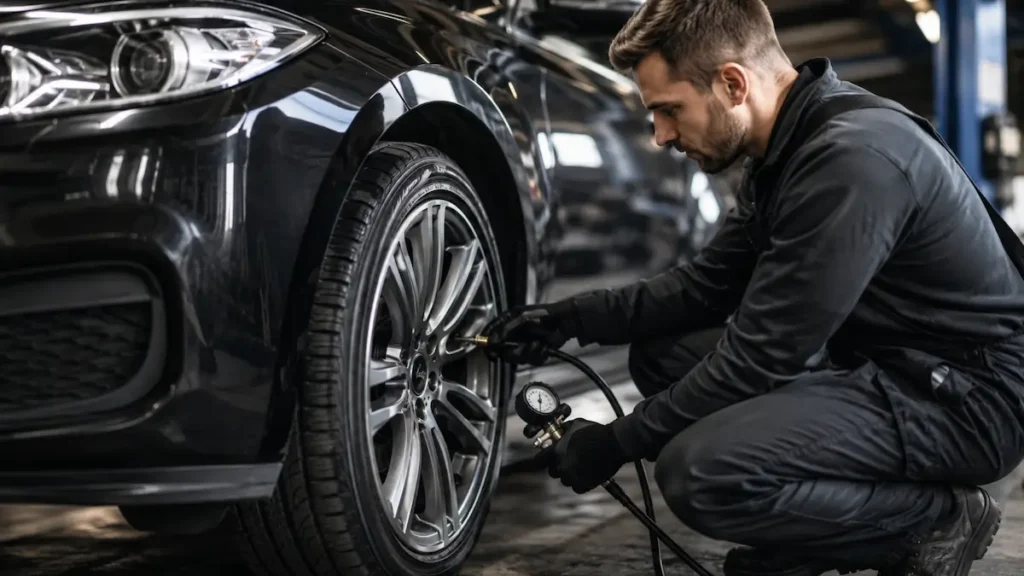
Nitrogen tyre inflation is a settled practice in commercial aviation, motorsport and mining haulage, and an optional upsell at most Australian tyre shops for everyday road vehicles. The science behind the practice is real but the marketing claims attached to it are not always accurate. This guide walks through how nitrogen inflation actually works, the benefits that hold up under operating conditions, the limitations and counter-arguments, the application areas where the case for nitrogen is strong, and the situations where standard compressed air is the practical choice.
How Nitrogen Tyre Inflation Works
Standard atmospheric air is roughly 78 per cent nitrogen, 21 per cent oxygen, and small percentages of water vapour, argon and carbon dioxide. When a tyre is filled with regular shop-line air, all of those components go in together, including the moisture and the oxygen. Nitrogen tyre inflation replaces that mix with high-purity nitrogen gas at typically 95 per cent or higher purity, removing most of the oxygen and almost all of the water.
The case for the substitution rests on three molecular-level differences. Nitrogen molecules are slightly larger than oxygen molecules and migrate through rubber more slowly, so tyre pressure drops less over time. Nitrogen does not support oxidation, so the inside of the rim and the steel belts in the tyre are less prone to corrosion. And the absence of water vapour means tyre pressure responds more predictably to temperature change rather than swinging as moisture in the air condenses or expands.
The Pros: Where the Benefits Hold Up
The case for nitrogen is strongest where tyres run hot, run hard, or run for long periods between checks.
Slower Pressure Loss
Tyres lose pressure naturally through the casing over time. Nitrogen migrates through rubber roughly 30 to 40 per cent more slowly than oxygen, so a nitrogen-filled tyre holds its pressure longer. For a fleet operator running scheduled inspections every few weeks, that translates to fewer underinflated tyres between services and a more consistent rolling resistance, which feeds directly into fuel economy.
Reduced Internal Corrosion
Without oxygen and water vapour inside the tyre, the steel belts and the wheel rim are less prone to internal corrosion. Long-life tyres on heavy haulage equipment, aircraft tyres that go through repeated retread cycles, and earthmover tyres on multi-year service all benefit from the reduction in internal moisture.
More Stable Pressure Under Heat
Tyre temperature rises with sustained high-speed running, heavy loads or hot ambient conditions. Compressed air contains water vapour that expands as the tyre heats, increasing pressure non-linearly. Dry nitrogen behaves more predictably, so pressure stays closer to the cold-set value as the tyre warms. The benefit is most visible in motorsport, on long-distance haulage, and in mining haulage, where loaded ambient temperatures and slow rotation generate considerable heat in the tyre.
Safety in Heavy-Duty and Mining Haulage
The strongest practical case for nitrogen sits in heavy-duty trucks and mining haulage applications. Underground and surface mine haulage tyres run at extreme loads, often on rough surfaces, at sustained speeds, and at significant cost (a single mining tyre can cost tens of thousands of dollars and take weeks to replace). The dry, non-oxidising nitrogen environment reduces the risk of an internal heat build-up triggering a fire or, in extreme cases, a tyre explosion. For these customers, nitrogen inflation is not a marketing upsell; it is a documented safety control written into operating procedures.
The Cons: Where the Case Weakens
Nitrogen inflation is not a universal upgrade. The benefits scale with operating intensity and shrink toward zero on routine passenger-car use.
Cost Per Fill
Nitrogen inflation costs money at the tyre shop where standard compressed air is free. The premium is typically charged per tyre on initial fill and per top-up. For a passenger vehicle that has its tyres checked every few weeks, the cost rarely pays back in fuel savings or extended tyre life.
Top-Up Reality
A nitrogen-filled tyre is only nitrogen-filled until the next top-up. Topping up a nitrogen tyre with regular compressed air progressively dilutes the nitrogen mixture and reduces the benefit. The practical implication: maintaining the nitrogen advantage requires returning to a shop with a nitrogen generator or cylinder supply, every time, for every top-up.
Marginal Benefit on Routine Use
The headline claim that nitrogen tyres “never lose pressure” is not accurate. They lose pressure more slowly, but the difference is measured in PSI per month, not PSI per year. A driver who checks their tyres monthly and adjusts to placard pressure with regular air will achieve almost the same fuel economy and tyre life outcomes as a nitrogen user, at no cost.
Not a Substitute for Inspection
Nitrogen does not detect punctures, pick up cuts in sidewalls or compensate for misalignment. A nitrogen-filled tyre with a slow puncture will go flat just like an air-filled one. Routine visual and pressure inspection still applies regardless of fill medium.
When Nitrogen Is Worth It
The decision framework is honest enough to summarise in a few lines. Nitrogen inflation makes a clear case in:
Mining haulage and large earthmoving equipment, where tyre cost, downtime and safety justify the practice.
Heavy-duty long-distance trucking, where pressure stability under heat affects fuel burn and tyre life across hundreds of thousands of kilometres.
Commercial aviation and motorsport, where regulation or performance margin makes nitrogen the default.
Long-life storage tyres on equipment that sits idle for months at a time, where slow pressure loss and reduced internal corrosion both matter.
The case is weaker for everyday passenger cars driven moderate distances at moderate speeds. For most road users, regular monthly pressure checks with shop air deliver most of the benefit at none of the cost.
Frequently Asked Questions
Can I top up a nitrogen tyre with regular air?
Yes, but doing so dilutes the nitrogen content and reduces the benefit. The tyre will still function safely, but the original nitrogen advantage erodes with each top-up. To preserve the benefit, top up at a shop with nitrogen supply.
Do I need to deflate my tyres before switching to nitrogen?
For the cleanest result, yes. The standard procedure is to deflate the tyre, refill with nitrogen, deflate again, and refill. This purges most of the residual oxygen and produces a high-purity nitrogen fill. Some shops use a single-fill purge cycle that approximates the same effect.
Will nitrogen tyres improve my fuel economy?
A correctly inflated tyre delivers the lowest rolling resistance and the best fuel economy. Nitrogen helps by maintaining that pressure for longer between checks. The fuel-economy benefit is real but small, and it disappears entirely if you check your tyres monthly with regular air anyway.
Are nitrogen tyres safer?
For mining haulage and heavy-duty trucking, yes; reduced internal corrosion and more stable pressure under load are documented safety improvements. For everyday road use the safety case is marginal compared with regular pressure checks and routine maintenance.
What purity nitrogen do tyre shops use?
Tyre shop nitrogen generators typically deliver gas at around 95 to 98 per cent purity, sufficient for the tyre application. Industrial cylinder nitrogen is supplied at 99.99 per cent or higher purity, which exceeds tyre-application requirements but is the standard product for industrial applications.
Pacific Gas Nitrogen Supply for Fleet and Mining
Pacific Gas supplies industrial-grade nitrogen at 99.99 per cent purity in D, E and G cylinders through a network of local distributors across NSW, QLD, VIC and SA. The same nitrogen used for tyre inflation in mining haulage, heavy-duty trucking workshops and aviation maintenance bays is also used for pressure-testing, brazing-purge work and inerting in metal fabrication and refrigeration trades. Cylinder exchange runs on the same model as a BBQ gas bottle: an empty cylinder is swapped for a full one. Pacific Gas offers both rental and customer-owned cylinder options. To organise a regular supply for a tyre service bay, mine site, transport workshop or fleet operator, find a Pacific Gas distributor in your area, or contact the Pacific Gas team directly.


