
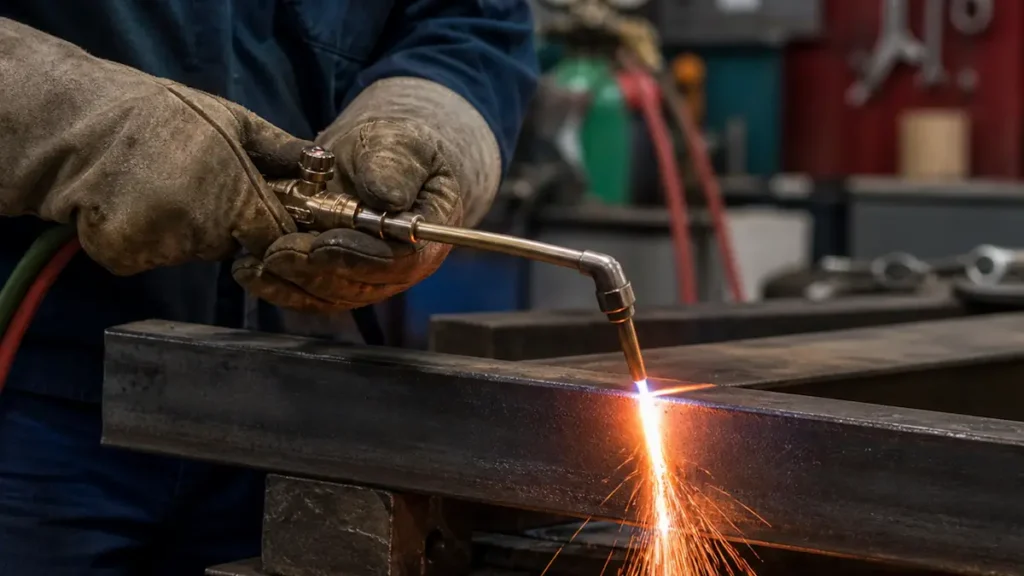
Oxy-acetylene welding is still one of the most common reasons a customer walks into a welding or industrial supplies store. Cylinders, regulators, torches, tips, PPE, safety gear, the list is long, and counter staff who are new to the category need to answer questions quickly and confidently. This guide is a practical cheat-sheet: what oxy-acetylene welding is, the equipment a full kit includes, the three flame types and when each is used, typical pressures and tip sizes, how to steer customers between oxy-acetylene and MIG or TIG, and the safety points every counter conversation should cover.
What Is Oxy-Acetylene Welding?
Oxy-acetylene welding (also called oxygen and acetylene welding, acetylene torch welding, or oxy acetylene gas welding) is a gas welding process that burns acetylene (C2H2) in pure oxygen to produce a flame of around 3,100C, hot enough to melt steel, cast iron, and most common fabrication metals. It has been around for more than a century and is still widely used because the equipment is portable, mains power is not required, and the same setup handles welding, cutting, brazing, soldering, and metal heating.
Typical customer applications include general fabrication and repair, mobile maintenance (farm, marine, mine sites), HVAC brazing, plumbing, artistic metalwork, boilermaking, and thin-sheet panel repair. The gas welding acetylene process is not the best choice for high-volume production welding or for aluminium work, those customers are better served by MIG or TIG. But for versatility, portability, and a low entry cost, oxy-acetylene welding remains the go-to.
Oxy-Acetylene Welding Equipment Checklist
Welding with an oxy acetylene torch means putting together a complete kit. Oxy acetylene welding equipment, the full welding with acetylene and oxygen setup, includes the following items. Use this as your checklist when a customer is starting from scratch.
Oxygen cylinder. G-size is the workshop standard; D or E suits portable and field work. Always vertical in transport, secured upright.
Acetylene cylinder. Contains acetone absorbed in a porous mass, so the cylinder must be stored and used upright and left to settle for at least 30 minutes before use if it has been on its side.
Oxygen regulator. Two-stage, with high-pressure (cylinder) and low-pressure (working) gauges. Right-hand thread fitting.
Acetylene regulator. Distinct colour coding (red), left-hand thread fitting with a notched nut so it cannot be connected to oxygen equipment by accident.
Flashback arrestors. Fitted to both the regulator outlet and the torch inlet. AS 4603 requires them at the regulator; retailers should recommend both ends as best practice.
Twin welding hose. Green for oxygen, red for acetylene, to AS 1335. Confirm the hose is in date and free of damage on every use.
Welding torch handle with welding tips. Tips are sized by fuel consumption and metal thickness. Most customers need a range from small (sheet metal) to medium (general fabrication).
Optional cutting attachment. Turns the same torch into an oxy-acetylene cutting setup for plate steel.
Friction striker (never a lighter or match), welding goggles (shade 5 minimum), leather gloves, leather apron, covered spark-resistant footwear, and an appropriate fire extinguisher.
The Three Oxy-Acetylene Flame Types
When customers weld with oxy acetylene, the welding torch acetylene flame is not one flame, it is three, depending on the oxygen-to-acetylene ratio. Customers who are new to welding oxygen and acetylene together often ask which flame to use. The short answer:
Neutral flame. Equal oxygen and acetylene. Inner cone is tight, rounded, and blue. This is the default welding torch oxy acetylene flame and suits most steel, stainless, and cast iron welding. It does not oxidise or carburise the weld.
Carburising (reducing) flame. Excess acetylene, a fuzzy, feathery outer cone is visible beyond the inner cone. Used for brazing, silver soldering, hard-facing, and welding nickel or high-carbon steel where oxidation must be avoided.
Oxidising flame. Excess oxygen, inner cone is shorter, the flame is noisier, and the sound is sharper. Narrower use case: welding brass and copper alloys, and for oxy-acetylene cutting once set up properly.
Setting the flame is a skill, and most customers will spend time practising on scrap before they trust it on a job. The visual cues above are what staff can walk through at the counter.
Typical Oxy-Acetylene Welding Pressures and Tip Sizes
Oxy acetylene welding pressures scale with tip size and metal thickness. Always point customers to the tip manufacturer’s chart because numbers vary by brand, but as a rule of thumb for common tip sizes:
Tip size 8 (approximately 1.6 mm metal): oxygen around 35 kPa, acetylene around 35 kPa.
Tip size 10 (approximately 2.4 mm metal): oxygen around 50 kPa, acetylene around 40 kPa.
Tip size 12 (approximately 3.2 mm metal): oxygen around 70 kPa, acetylene around 50 kPa.
Tip size 15 (approximately 5.0 mm metal): oxygen around 140 kPa, acetylene around 60 kPa.
The hard rule is the acetylene working pressure ceiling: never exceed 100 kPa (15 psi). Above this, acetylene can decompose spontaneously even without oxygen present, and a flashback risk rises sharply. This is the single most important acetylene gas welding safety number for a retailer to know.
Oxy-Acetylene Welding vs MIG and TIG
Counter staff often need to qualify what a customer actually needs. A customer who says they want to weld may be better off with MIG or TIG than with oxy-acetylene.
Oxy-acetylene. Portable, no mains power, no shielding gas supply, low entry cost, multi-purpose (weld, cut, braze, solder, heat). Slower than MIG; not ideal for aluminium. Best for mobile repair, HVAC brazing, plumbing, thin sheet, art and craft work, and occasional hobby welding.
MIG. Fast, clean, production-friendly. Needs mains power and a shielding gas cylinder. Higher entry cost. Best for workshop fabrication, thicker steel, repetitive production welding.
TIG. The most precise process, very clean welds, the steepest learning curve, the highest kit cost. Best for thin stainless, aluminium, critical structural work, and finished visible welds. Typically runs on argon or argon/helium shielding.
If a customer wants to weld aluminium, oxy-acetylene is not the right answer. Point them at TIG with argon shielding gas.
Common Customer Questions at the Counter
What do I need to weld aluminium?
Oxy-acetylene is not the right process for aluminium. Recommend a TIG setup with argon shielding gas. Pacific Gas supplies argon suitable for TIG work, and the argon for aluminium welding guide is a useful starting point for customers researching the switch.
What cylinder sizes should I start with?
It depends on duty. G-size oxygen and E-size acetylene suit a workshop that welds most days. For mobile work (tradies, HVAC, on-site repair) and D-size oxygen are easier to transport. Most customers upsize once they learn their usage rate.
Can I store acetylene cylinders on their side?
No, never. Acetylene is dissolved in acetone inside a porous mass. Laid down, the acetone can leak into the regulator and contaminate the system. Always store and use acetylene cylinders upright. If one has been horizontal, stand it up and let it settle for at least 30 minutes before use.
Do I really need flashback arrestors on both ends?
AS 4603 requires them at the regulator. Fitting a second set at the torch inlet is industry best practice and is what responsible retailers recommend. The cost is small compared to the consequences of a flashback reaching the cylinder.
Can I swap acetylene for MAPP gas or propane?
For oxy-acetylene welding of steel, no. Acetylene’s flame is hotter (around 3,100C) and more concentrated than MAPP or propane flames, which is why it is the standard for gas welding. For cutting, brazing, and heating, MAPP or propane with oxygen can do the job and may be cheaper for high-volume cutting work.
Safety Essentials to Walk Customers Through
Never use oil or grease on oxygen fittings, pure oxygen plus hydrocarbons is an explosion risk.
Open cylinder valves slowly, with yourself standing to one side.
Purge hoses before lighting the torch.
Use a friction striker. Never a lighter, match, or cigarette.
Keep acetylene working pressure below 100 kPa.
Fit flashback arrestors at the regulator and at the torch.
Inspect hoses for cuts, cracks, or heat damage before every use.
Close valves, bleed lines, and store cylinders upright and secured at the end of each session.
Keep a dry chemical or water fire extinguisher within arm’s reach of the work area.
Oxy-Acetylene Welding: Counter Cheat-Sheet
Print this out and keep it by the till.
Full kit: oxygen cylinder, acetylene cylinder, oxygen regulator, acetylene regulator, flashback arrestors (x2 each end), twin welding hose, torch handle, welding tips, friction striker, PPE.
Hose colour code: green = oxygen, red = acetylene (AS 1335).
Acetylene maximum working pressure: 100 kPa. Never exceed.
Flame types: neutral (most welding), carburising (brazing, silver soldering), oxidising (brass, copper, cutting).
Cylinder orientation: oxygen upright or horizontal in transport, acetylene upright always.
Thread direction: oxygen right-hand, acetylene left-hand (notched nut).
Not for aluminium: direct the customer to TIG with argon shielding gas.
Not for production volume: direct the customer to MIG for repetitive workshop welding.
PPE minimum: gloves, shade 5 goggles, leather apron, covered footwear, fire extinguisher.
Oxygen and Acetylene Supply for Your Customers
Pacific Gas supplies oxygen and acetylene in cylinders through a distributor network across Australia. Retailers, workshops, and end-users access gas via the cylinder exchange model: empty cylinders are swapped for filled ones at the local distributor, with no outright purchase required.
For shops reselling cylinders or arranging cylinder exchange for customers, find a distributor in your state or contact Pacific Gas to talk through supply options. Pacific Gas does not retail welding equipment, torches, or consumables, those belong with specialist welding suppliers.


