
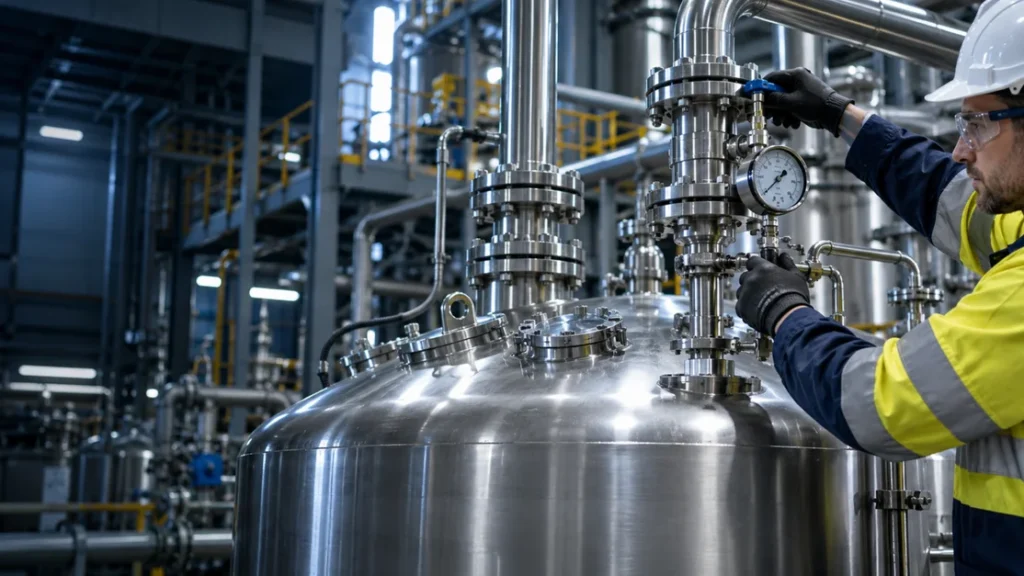
Nitrogen Purging and Blanketing for Industry
Air is the enemy inside a lot of industrial equipment. Oxygen corrodes pipework, degrades stored product and turns flammable vapour into an explosion risk; moisture contaminates refrigerant lines and process systems. Nitrogen purging and blanketing are the standard fixes: purging pushes air and moisture out of a space, blanketing keeps them out. Both run on the same gas for the same reason, nitrogen is inert, dry, non-flammable and makes up most of the atmosphere already, which makes it the cheapest safe way to replace air with something that does no harm.
Purging and Blanketing: the Difference
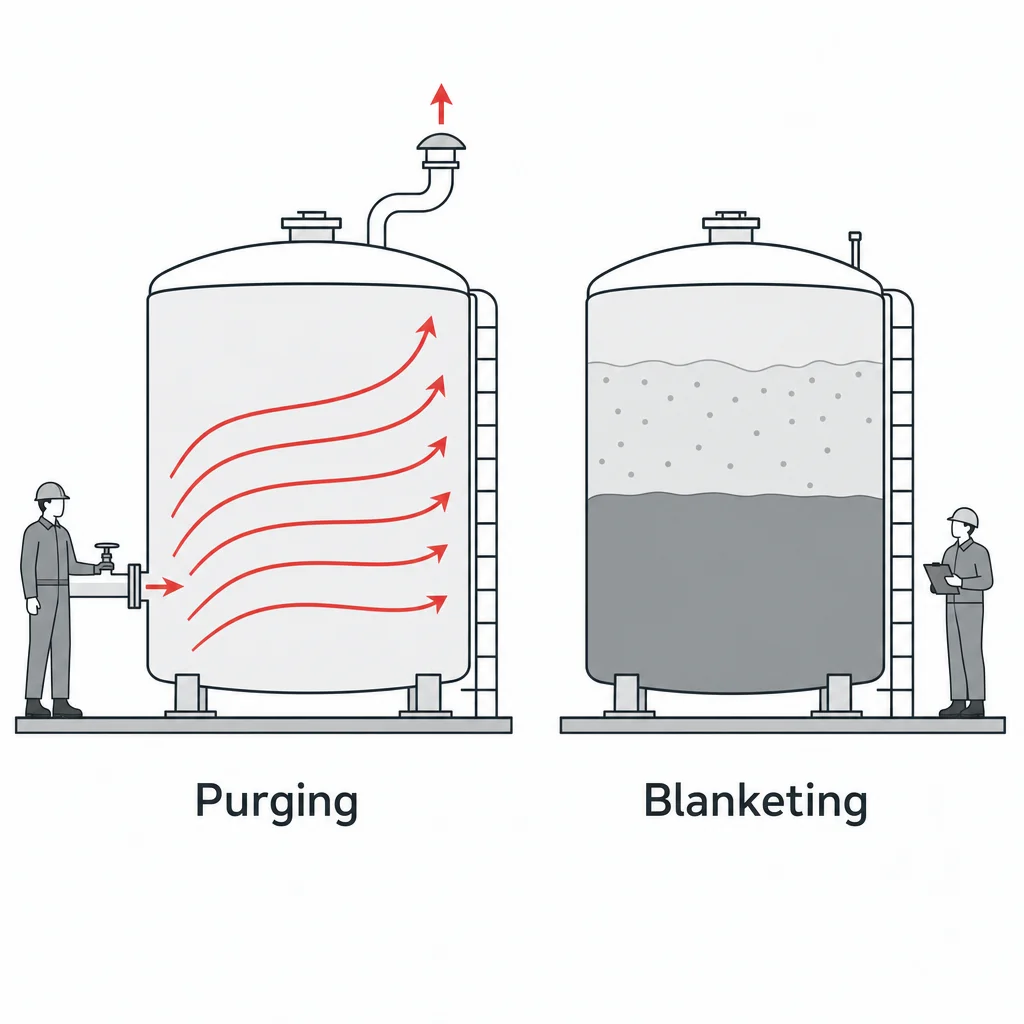
Purging is a one-off or repeated operation: nitrogen is introduced into a pipe, tank or vessel to displace the air, oxygen or vapour inside, usually before welding, commissioning, maintenance or a product change. When the job is done, the system is either returned to service or filled with product.
Blanketing, sometimes called padding, is continuous: a nitrogen layer is maintained in the headspace of a tank or vessel above the stored product, so that as product is drawn down or temperatures change, the space fills with nitrogen instead of air. Purging gets a system clean; blanketing keeps a product protected for as long as it is stored.
Where Purging Is Used
Pipework and Vessels Before Hot Work
Cutting or welding on pipework and tanks that have held flammable product is only safe once the flammable atmosphere is gone. Nitrogen purging displaces the vapour and drops the oxygen level below what combustion needs, and the atmosphere is verified by measurement before work starts. The same applies to commissioning new pipework, where purging clears construction debris, air and moisture before product is introduced.
Refrigeration and Air Conditioning Lines
Brazing refrigerant lines with air inside them coats the inner wall with black oxide scale that later circulates through the system and damages compressors and expansion devices. Flowing a gentle nitrogen purge through the line while brazing keeps the interior oxide-free. Nitrogen is also used to pressure-test refrigeration circuits before evacuation, because it is dry and inert and will not condense at working pressures.
Food, Beverage and Packaging Lines
Purging process lines and vessels with nitrogen removes the oxygen that stales oils, wine and packaged food. In packaging, a nitrogen purge into the pack immediately before sealing is the difference between a product that oxidises in weeks and one that holds its shelf life.
Where Blanketing Is Used
Blanketing earns its keep wherever oxygen or moisture in a tank headspace costs money or creates risk. Storage tanks for flammable and combustible liquids run nitrogen blankets to keep the vapour space below the level of oxygen combustion needs. Wineries and edible oil producers blanket tanks to stop oxidation flattening flavour. Chemical plants blanket reactive product to prevent degradation and moisture pickup. The mechanics are simple: a regulated nitrogen supply holds a slight positive pressure in the headspace, topping up as product is drawn down, so the tank breathes nitrogen instead of air.
Purging Methods
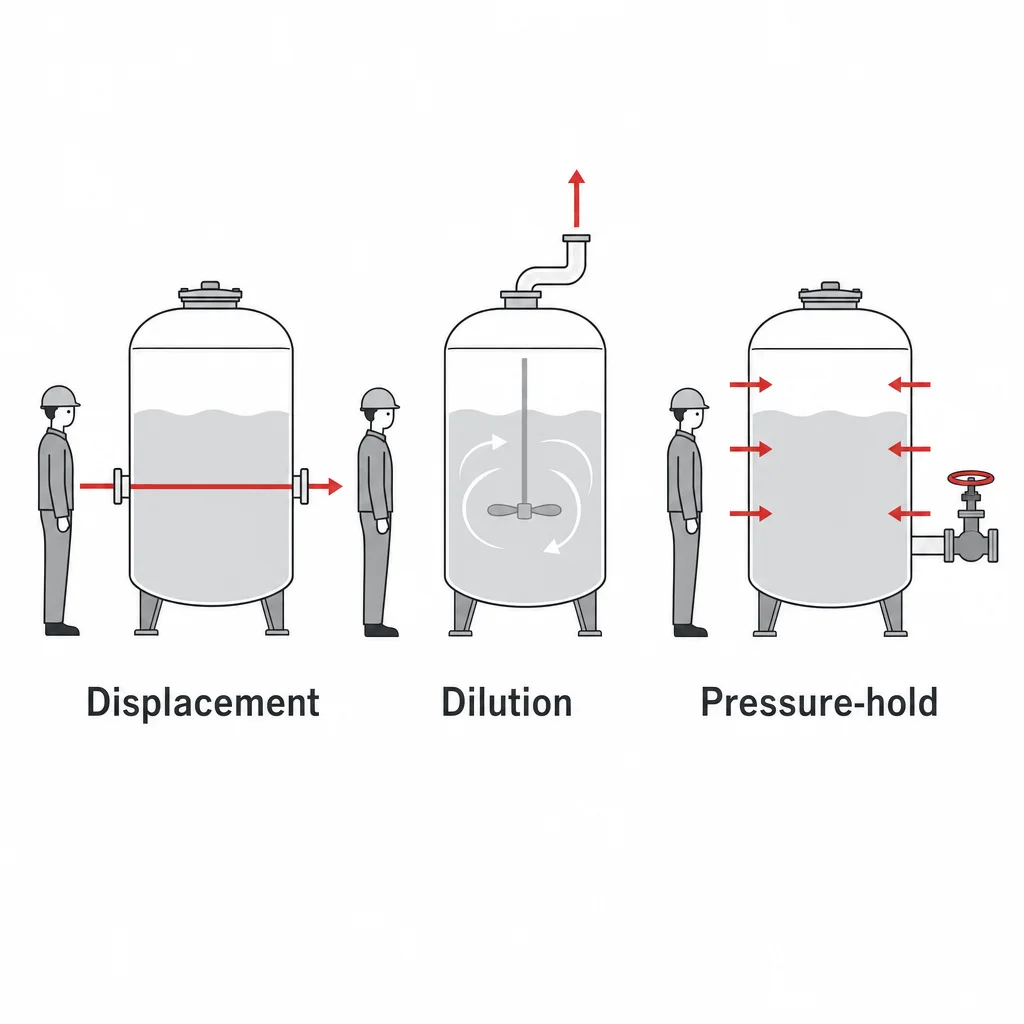
Three methods cover most jobs. Displacement purging introduces nitrogen at one end of a system and pushes the air out the other, best for pipelines and simple vessels, using close to the system’s own volume in gas. Dilution purging feeds nitrogen into a space while the mixed atmosphere vents, repeated until the oxygen level measures low enough, suited to complex vessels where a clean front-to-back sweep is not possible. Pressure-hold purging pressurises the vessel with nitrogen and vents it, in cycles, each cycle diluting the remaining oxygen, effective where the vessel can take the pressure and openings are limited.
Whichever method is used, the endpoint is measured, not assumed: an oxygen meter reading at the vent tells the operator when the target atmosphere is reached.
Nitrogen Safety in Purging Work
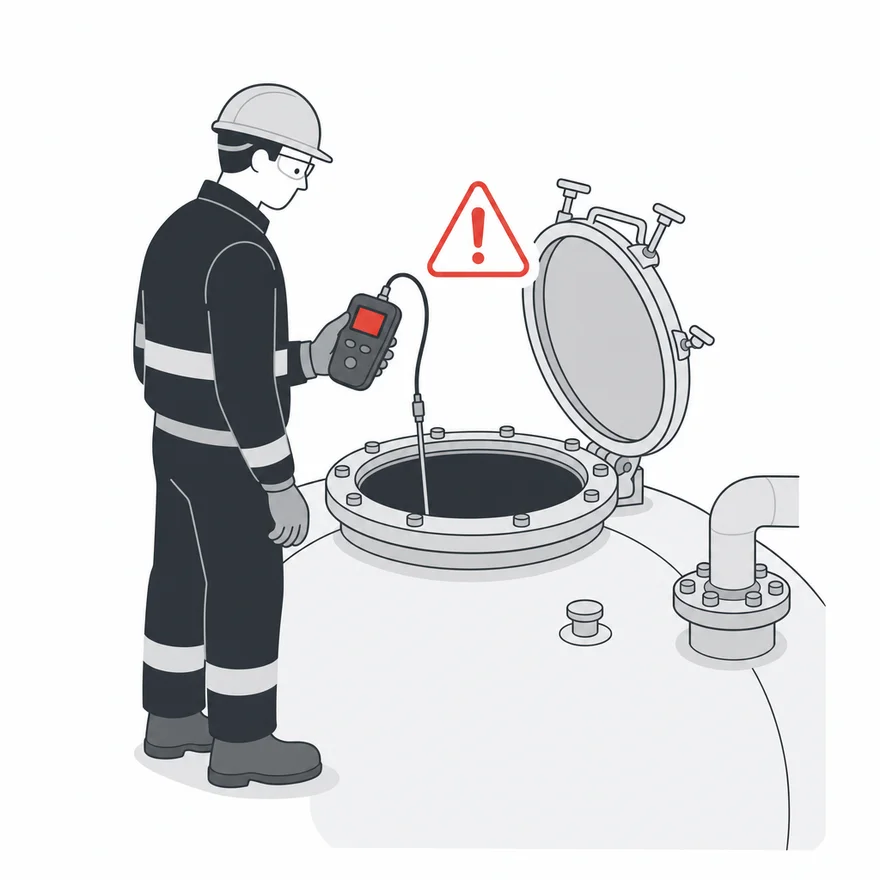
The property that makes nitrogen useful is the property that makes it dangerous: it displaces oxygen, and it gives no warning while doing so, no colour, no smell, no irritation. A purged vessel or a poorly ventilated room where nitrogen has been discharging is an asphyxiation hazard, and most nitrogen incidents involve someone entering a space that looked safe.
The controls are established. Treat purged vessels and pits as confined spaces: no entry without atmosphere testing, and follow confined space procedures wherever they apply. Vent purge outlets to open air, not into rooms. Where nitrogen discharges indoors, ventilate and monitor oxygen levels. Keep cylinders restrained upright, connected through a regulator, and stored in ventilated areas.
Sizing Nitrogen Supply for Purging and Blanketing
Pacific Gas supplies nitrogen in pewter-coloured D, E and G cylinders holding 1.7, 4.0 and 9.1 cubic metres respectively. A displacement purge uses roughly the system’s internal volume in gas, so a few hundred metres of small-bore pipe purges comfortably from a single E or G cylinder, while repeated dilution or pressure-hold cycles multiply the requirement. Occasional purge work, an HVAC technician brazing line sets, a workshop pressure-testing, runs well on D or E sizes that travel in a vehicle. Continuous blanketing duty and regular purge programs sit on G cylinders or manifolded banks, sized from draw-down rate. The per-gas contents and run-time maths are set out in the gas cylinder size guide.
Nitrogen Purging FAQ
What is nitrogen purging?
Nitrogen purging replaces the air, oxygen, moisture or flammable vapour inside pipes, tanks and vessels with inert nitrogen, before welding, commissioning, maintenance or storage. It removes the oxygen that drives corrosion, product spoilage and combustion risk.
What is the difference between purging and blanketing?
Purging is an operation that cleans a space of air or vapour; blanketing continuously maintains a nitrogen layer in a tank headspace to keep air away from stored product. Purging prepares a system; blanketing protects it over time.
Why purge with nitrogen while brazing refrigeration lines?
Brazing with air in the line forms oxide scale inside the pipe that later circulates and damages the system. A gentle nitrogen flow during brazing keeps the line interior clean, and the same bottle pressure-tests the circuit afterwards.
How much nitrogen does a purge take?
As a starting rule, a displacement purge uses about the internal volume of the system being purged; dilution and pressure-hold methods use more, in proportion to the cycles run. The endpoint is always confirmed with an oxygen meter, not estimated.
Is nitrogen purging dangerous?
Nitrogen is not toxic, but it displaces breathable air without warning. Purged vessels are confined spaces requiring atmosphere testing before entry, purge vents belong outdoors, and indoor discharge calls for ventilation and oxygen monitoring.
Nitrogen Supply from Pacific Gas
Pacific Gas supplies industrial nitrogen in D, E and G cylinders through local distributors across Australia, on swap-and-go exchange on customer-owned cylinders with no rental contract. The same nitrogen covers purging, blanketing, pressure testing and food and beverage duties. For supply near a site, or advice on sizing cylinders to a purge program or blanketing draw, contact Pacific Gas.


